SolarEdge Solar Inverters
Israel · 5 models
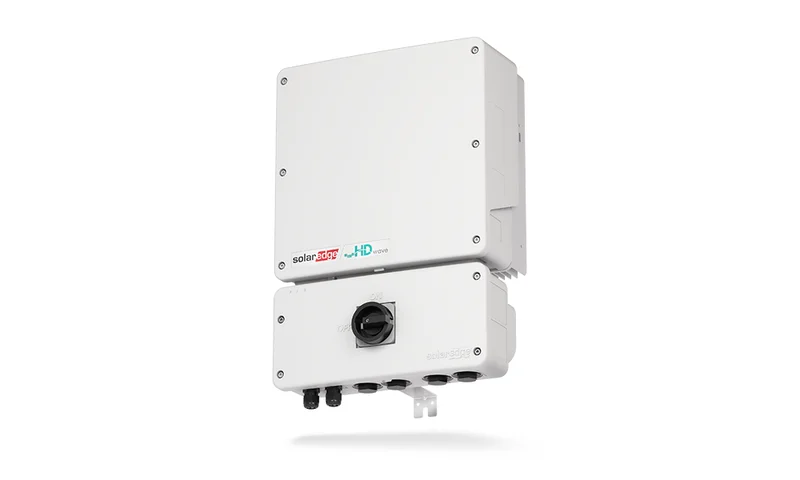
SE10000H
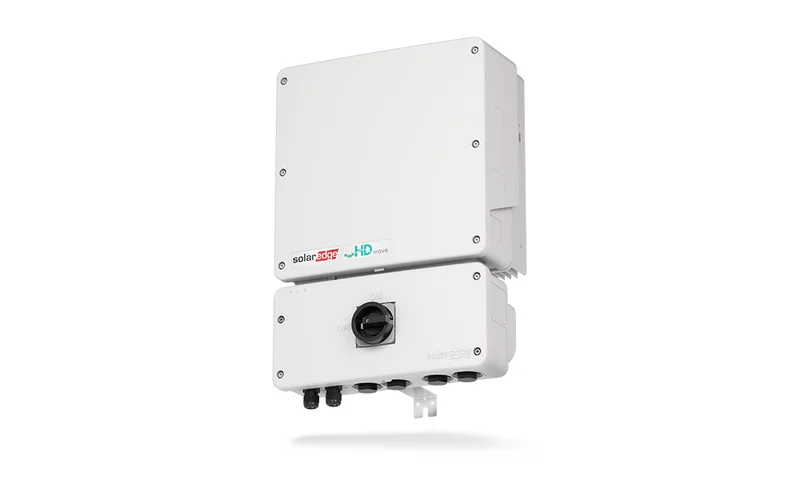
SE3000H
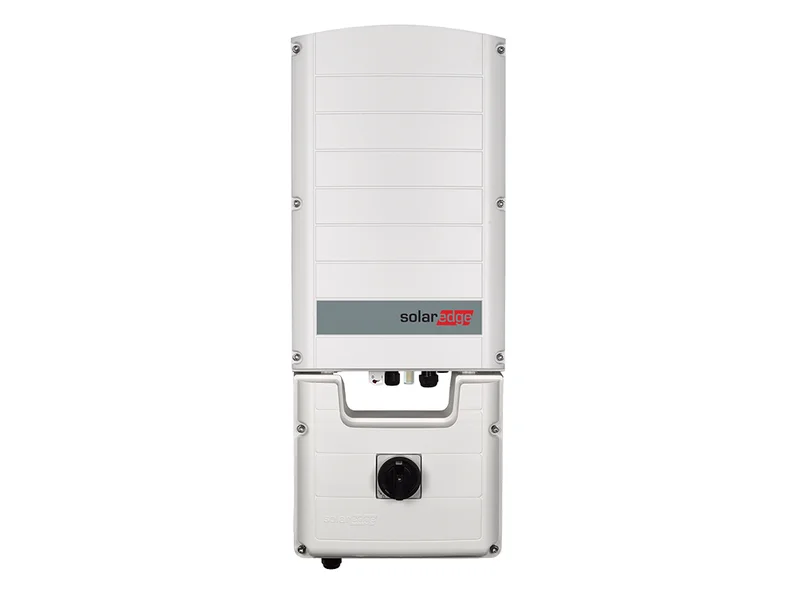
SE33.3K
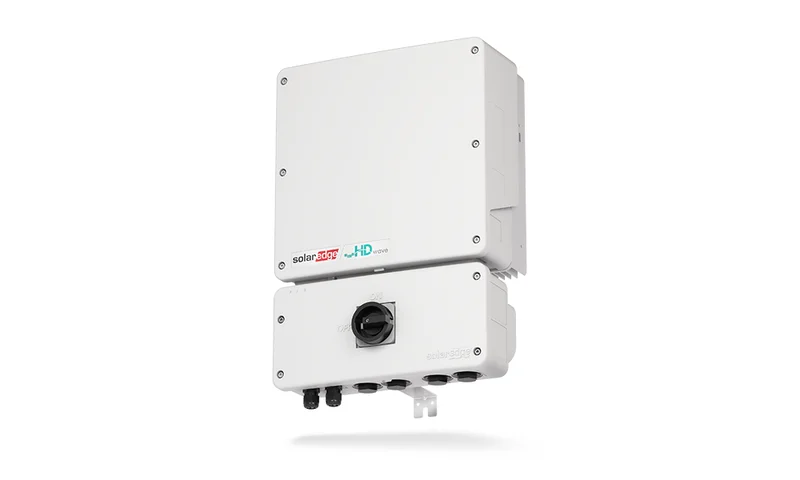
SE6000H
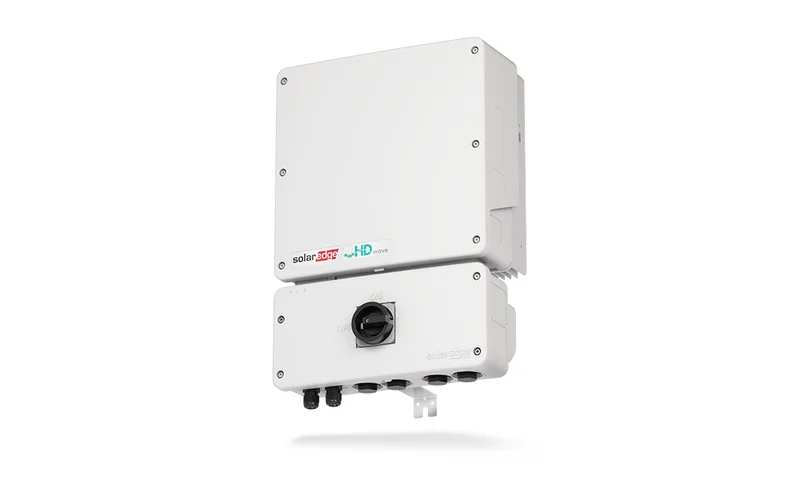
SolarEdge Home Wave
All 5 SolarEdge models
Specifications as published by the manufacturer. A dash means the figure is not published.
| Model | AC power | Efficiency | MPPT | Phases | Weight |
|---|---|---|---|---|---|
| SE10000H | 10000 W | 99.2 % | — | 1 | 13.2 kg |
| SE3000H | 3000 W | 99.2 % | — | 1 | 10.5 kg |
| SE33.3K | 33300 W | 98.3 % | — | 3 | 37.5 kg |
| SE6000H | 6000 W | 99.2 % | — | 1 | 11.9 kg |
| SolarEdge Home Wave | 7600 W | 99 % | — | 1 | 12 kg |
How the SolarEdge inverter range is organised
SolarEdge is the smallest brand on this site, with five entries, and they divide four to one between single-phase residential and three-phase commercial.
Single-phase, 3 to 10 kW
Four entries are single-phase 240 V units, three of them recorded on SolarEdge's HD-Wave platform. They scale almost purely by power: SE3000H at 3000 W, SE6000H at 6000 W, the SolarEdge Home Wave at 7600 W and SE10000H at 10000 W.
In all four, nominal AC power and maximum AC power are the same figure. That is worth pausing on, because most brands here record some overload headroom — a Deye or GoodWe unit will typically list a maximum ten percent above nominal. These entries do not, so the number in the designation is the number you plan around.
Weight tracks power closely across the group: 10.5 kg, 11.9 kg, 12 kg and 13.2 kg in that same order. All four share a 480 V maximum DC input and a 240 V AC output. Maximum efficiency is recorded at 99.2% for the three HD-Wave units and 99% for the Home Wave; European efficiency is recorded only for the SE3000H and SE6000H, at 97.5% each.
Three-phase
The one commercial entry, SE33.3K, is a 33300 W three-phase string inverter — again with nominal and maximum AC power identical. Its AC output is recorded as 277/480 V: that is the phase-to-neutral and phase-to-phase pair of one four-wire configuration, not two selectable voltages. Maximum DC input stays at 480 V, maximum efficiency drops to 98.3%, and the chassis weighs 37.5 kg, nearly three times the heaviest single-phase unit.
Enclosures
SolarEdge publishes NEMA enclosure classes rather than IP codes, and these entries store them as published: NEMA 4X on all four single-phase units, NEMA 3R on the SE33.3K. The two systems are not interchangeable and we do not convert between them, so a SolarEdge enclosure rating cannot be read directly against the IP figures recorded for other brands.
MPPT channel count is recorded for only one entry, the SE33.3K, at one channel.
Reading a SolarEdge model designation
SolarEdge designations are the most literal on this site: the number is the power, and the stored specifications confirm it every time.
SE opens the code on four of the five entries.
The number is nominal AC power. SE3000H records 3000 W, SE6000H records 6000 W, SE10000H records 10000 W. On the commercial unit the figure is in kilowatts instead: SE33.3K records 33300 W. There is no rounding and no marketing number — what the designation says, the spec table repeats. Deye and Growatt both compress a whole family into one designation; a SolarEdge code names exactly one machine.
H marks the HD-Wave platform. All three SE…H entries are recorded as HD-Wave string inverters at 99.2% maximum efficiency, single-phase and 240 V.
The exception is the name without a code. The SolarEdge Home Wave carries no number at all, and its recorded 7600 W cannot be derived from the name. It is a product name rather than a designation, which matters if you are searching by wattage.
Nothing in a SolarEdge designation encodes phase count, MPPT channels or enclosure class. The SE33.3K is three-phase and NEMA 3R while the SE…H units are single-phase and NEMA 4X, but only the spec table says so.